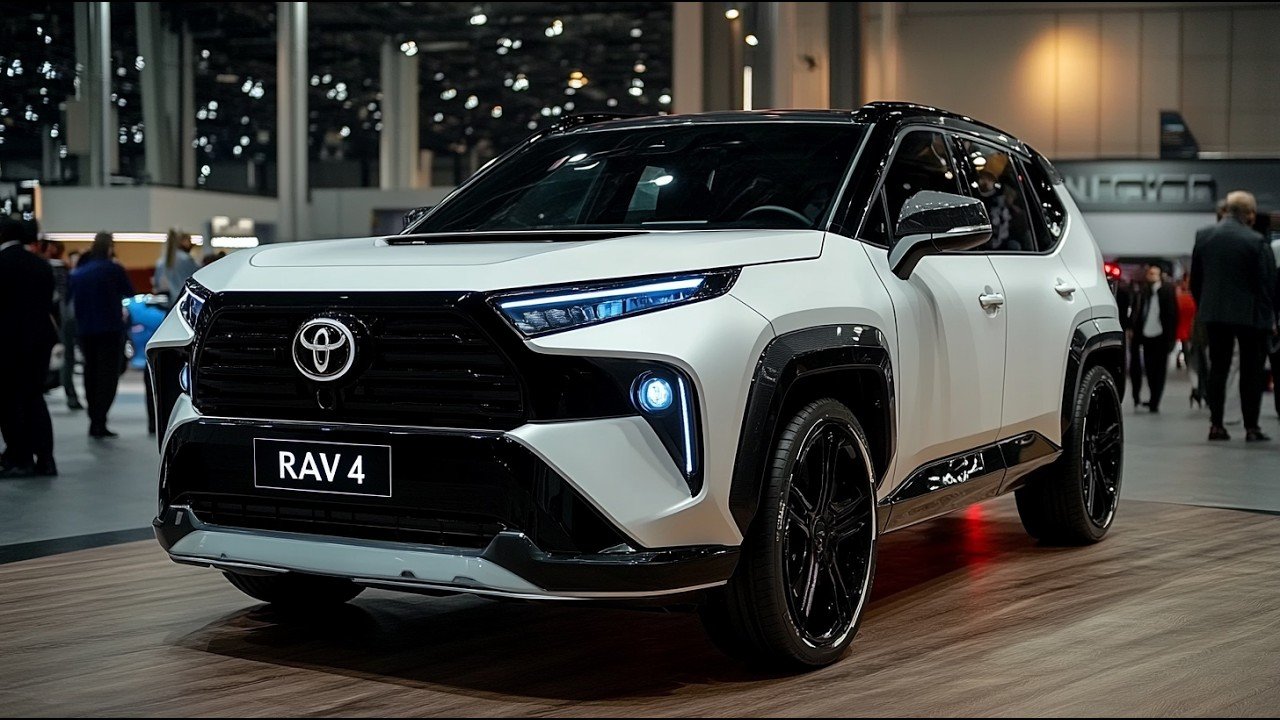
The Toyota RAV4 continues to dominate the compact SUV segment globally, and for 2026, Toyota is preparing one of the most significant generational upgrades in its history. With increasing demand for electrification, improved efficiency, and advanced software-based driving experiences, the 2026 Toyota RAV4 is expected to transition into a hybrid-only and plug-in hybrid lineup, eliminating traditional gasoline-only engines. The redesign focuses on modern styling, improved off-road capabilities, enhanced technology, and greater efficiency while retaining its reputation for durability and everyday practicality.
Bolder Exterior Design
The 2026 RAV4 is expected to embrace a more rugged and athletic design language, influenced by Toyota’s latest SUV lineup, including the new Land Cruiser, Crown Signia and 4Runner. Anticipated design elements include:
- Sharper and more muscular body lines
- Redesigned LED head and tail lamps
- More squared-off stance for an adventurous look
- Larger wheel options, possibly up to 20 inches
- Optional two-tone roof color themes
- Distinct style packages for urban, sporty, and off-road buyers
The RAV4 has historically appealed to city drivers, families, and explorers alike — the 2026 redesign aims to make each personality more visually unique.

Hybrid-Exclusive Powertrain Strategy
Toyota’s long-term strategy increasingly centers around hybrid and plug-in hybrid technology. For 2026, expect:

- Standard hybrid powertrain across all non-plug-in trims
- Improved fuel efficiency and torque delivery
- Smoother acceleration through updated electric motor control
- All-wheel drive available with dedicated rear-motor assist
- A more powerful plug-in hybrid (Prime-type) model with extended electric-only driving range
The shift to hybrid-only technology aligns with Toyota’s focus on accessible electrification rather than full battery-electric exclusivity.
Interior Technology and Comfort Upgrades
Inside, the 2026 RAV4 is expected to adopt a more refined and digital-centric cabin with an SUV-premium feel. Potential features include:
- Larger digital instrument display
- Upgraded center touchscreen with faster software
- Wireless Apple CarPlay and Android Auto
- Advanced voice-activated assistant
- Enhanced cabin insulation for quiet highway cruising
- Multi-zone climate control with rear vents
- Softer touch materials and redesigned seating
- Cargo space will continue to remain a strong advantage, with improved floor design and flexibility for travel and outdoor use.
Safety, Software & Driving Assistance
Toyota is consistently improving its driver-assistance platform, and the 2026 RAV4 is expected to introduce the next generation of advanced safety systems, including:

- Updated adaptive cruise control
- Enhanced lane-centering technology
- More precise parking and cross-traffic alerts
- Optional 360-degree camera and auto-parking
- Over-the-air software update capability
With an increasingly software-defined architecture, the SUV may receive future driving enhancements without requiring a dealership visit.
(FAQ) Toyota RAV4 2026
1. Is the 2026 Toyota RAV4 fully electric?
No — it is expected to be hybrid-only and plug-in hybrid, not fully electric.
2. Will the 2026 RAV4 still have all-wheel drive?
Yes, multiple trims are expected to offer electric-assisted all-wheel drive.

3. Will the RAV4 Prime continue?
Yes, the plug-in hybrid version is expected to return with improved power and electric range.
4. Is this a complete redesign or a facelift?
The 2026 model is anticipated to be a full next-generation redesign.
5. When will the 2026 RAV4 be available?
It is expected to launch late 2025 or early 2026, depending on region.

6. Will off-road focused trims continue?
Yes, adventure-oriented versions similar to the current TRD or Woodland editions are expected.
Final Impression
The 2026 Toyota RAV4 represents a major turning point for one of the world’s best-selling SUVs. By combining rugged styling, fuel-saving hybrid technology, a modern software-driven interior, and next-level safety features, Toyota aims to deliver a vehicle that remains practical, advanced, and future-ready without sacrificing reliability and everyday convenience.
